
Digital Torque Wrench Guide
When a digital torque wrench is worth the extra money, which features matter, and where a click wrench still wins.
By Owen Briggs ·
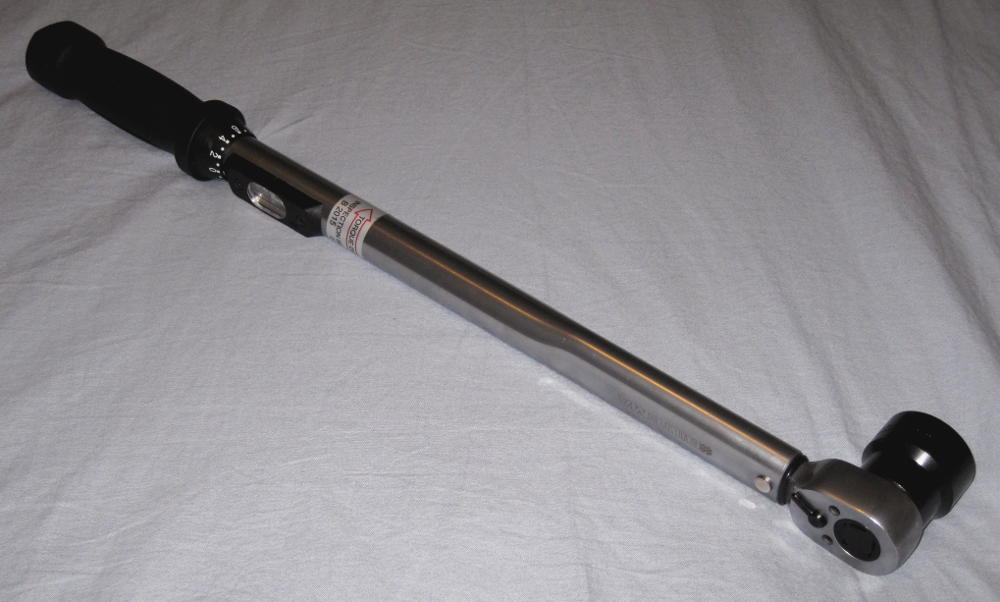
A digital torque wrench measures twist with a strain gauge and shows the number while you pull. Lights, a beep, and a vibrating handle mark the target. That is the whole product. It is not magic, and it is not a replacement for every click wrench in the drawer.
The hard part is not the screen. It is whether you can see the number, or trust the beep and buzz, while you are pulling. Home Depot shelves mix handheld click-style electronics with Milwaukee’s M12 FUEL tool. Those are different jobs.
What the electronics add
Track mode is the feature that changes how you work. The number climbs as clamp load builds. You can ease into a 22 ft-lb intake bolt instead of hoping a 1/2-inch clicker was honest at the bottom of its scale. Peak hold records the highest value after you stop, which is how you catch an overshoot.
Unit switching is the second real benefit. Shop manuals mix ft-lb, in-lb, and N·m. A digital wrench that flips units in the menu removes a class of error that sends people after an inch-pound wrench once they have already rounded a plug.
Angle mode is the third. Torque-to-yield bolts are tightened to a number and then turned another 90 degrees. A click wrench cannot count angle. Many electronic wrenches can. If you rebuild engines, that feature alone can justify the price.
| Feature | Why it matters | Who needs it |
|---|---|---|
| Live display | See the climb instead of waiting for a click | Tight engine bays |
| Peak hold | Shows what you actually applied | Anyone who overshoots |
| Unit conversion | ft-lb, in-lb, N·m on the tool | Mixed manuals |
| Angle | Torque-plus-angle specs | Head bolts, some axles |
| Memory presets | Save repeat jobs | Shops doing the same wheels |
| Batteries | The wrench is dead without them | Everyone |
Click vs digital in the real garage
Lug nuts favor a click wrench. You are on the floor, the head is in a well, and you want one tactile event per nut. Digital wrenches can do wheels, but the learning curve is real: the beep ramps up, then the over-torque alarm, and a fast pull jumps past the target. Forum complaints about “the worst tool I ever bought” are usually this mismatch, not a broken gauge.
Precision jobs favor digital. Valve covers, plastic pumps, and bicycle stems live in a range where a big click wrench is clumsy. A 3/8-inch electronic wrench with a fine display is calmer than a 1/2-inch clicker set to 18 ft-lb.
What to look for on the spec sheet
Accuracy should be printed as a percent of reading, clockwise and counterclockwise, with a range. ±2% CW from 20% to 100% of scale is a common honest claim. A wrench that only quotes “±2%” with no range is marketing.
Tooth count still matters. A 72-tooth or 120-tooth flex head is the difference between reaching a starter bolt and removing the intake. Flex heads are worth it on cars; they are optional on a dedicated wheel wrench.
Power source is a preference. AA cells are easy to replace. Built-in rechargeable packs are fine until they are not. If you use the wrench four times a year, AAs sitting in a drawer are the better design.
Browse 3/8 digital torque wrenches
Brands you will see in shops
GearWrench electronic wrenches are the default “better than Amazon no-name, cheaper than Snap-on” pick. ICON and Quinn digitals from Harbor Freight get dragged through YouTube accuracy tests; some pass, some heat up, all of them need the same storage discipline as a clicker.
Snap-on TechAngle wrenches are the reference a lot of techs mean when they say digital. They cost truck money. If you are not billing hours, a GearWrench or Tekton electronic model plus a mechanical backup is the adult purchase. Do not pay Snap-on money for a color screen unless you already buy off the truck.
How to use one without overshooting
Set the target. Select track mode. Pull slower than you would with a click wrench as you enter the last 10%. Stop at the cue. If you blew past it, loosen and repeat; do not “tap it back.” Peak hold will embarrass you once, which is the point.
Store it like a measuring tool. Take the batteries out for long storage. Keep a click wrench anyway. Electronics fail on the day the head gasket is already on the kitchen table. Calibration still applies; the calibration covers both mechanical and electronic tools.
Common questions
A decent digital wrench is often rated ±2% clockwise, versus ±3% or ±4% for many click wrenches. The bigger everyday difference is the live display. You can see that you are at 92 of 95 ft-lb instead of hoping the next millimeter of pull is the click.